What is Retail Ready Packaging and How Does It Work?
Retail Ready Packaging (RRP) has revolutionized the way products reach consumers. According to industry expert Sarah Thompson, "RRP streamlines the supply chain and enhances shelf presence." This statement encapsulates the essence of retail ready packaging. It is not just about packaging; it’s a strategy that connects brands with consumers more effectively.
Retail ready packaging makes it easier for retailers to display products. It often involves packaging that is attractive and functional. The design typically allows for easy stacking and immediate visibility. However, the challenge lies in balancing aesthetics with practical needs. Some businesses struggle to find materials that are both eye-catching and sustainable. This leads to a disconnect between the packaging and consumer expectations.
Moreover, not every product is suited for retail ready packaging. Some items do not fit neatly into this model. It raises questions about versatility and adaptability in product design. Brands must think critically about how their offerings can meet packaging standards while also appealing to consumers. The journey to effective retail ready packaging is ongoing, filled with opportunities for innovation and improvement.
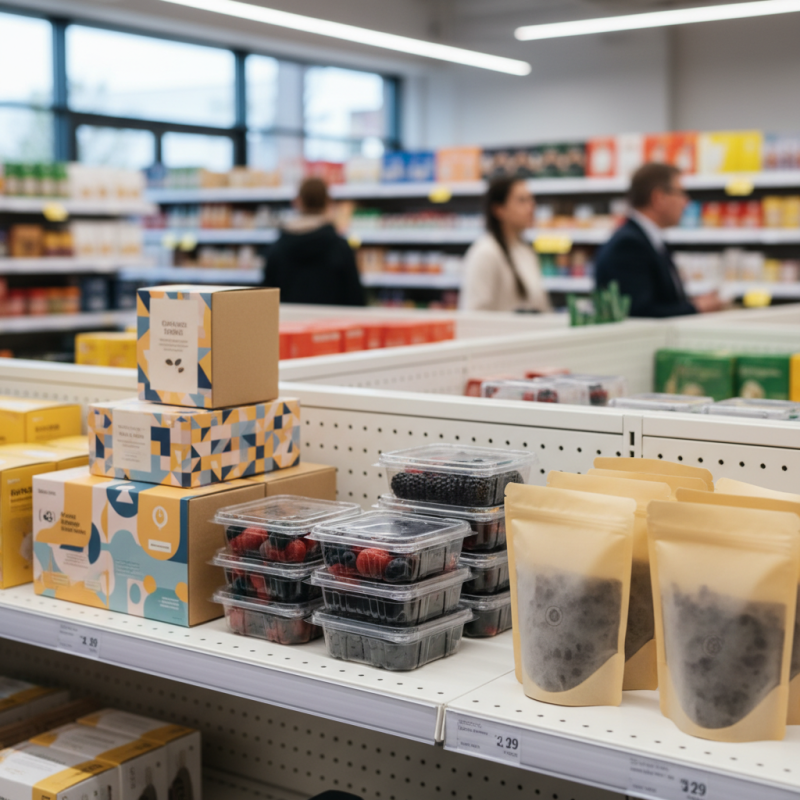
Definition of Retail Ready Packaging (RRP)
Retail Ready Packaging (RRP) refers to packaging designed specifically for retail environments. Its primary goal is to enhance product visibility and streamline the stocking process. RRP allows products to be displayed directly on shelves with minimal additional handling. This approach optimizes both the consumer experience and operational efficiency for retailers.
RRP typically features eye-catching graphics and easy-to-open designs. These packages often include perforations or built-in handles, making restocking easier. However, not all RRP designs achieve their intended impact. Some products may fail to attract consumer attention despite creative packaging. It can be frustrating for brands when consumers overlook their products. This highlights the importance of testing packaging designs before full implementation.
Another consideration is sustainability. While RRP promotes efficiency, the materials used can vary greatly. Some designs may not be environmentally friendly, leading to concerns among eco-conscious shoppers. A balance between aesthetic appeal and eco-friendliness remains a challenge. As retailers and brands strive to meet consumer preferences, revisiting RRP strategies is essential for continuous improvement.
What is Retail Ready Packaging and How Does It Work?
| Dimension |
Description |
Benefits |
| Definition |
Retail Ready Packaging (RRP) is packaging designed for ease of handling and display in retail environments. |
Enhances visibility, increases sales, and simplifies stocking. |
| Components |
Typically includes trays, boxes, and labels that facilitate quick access to products. |
Reduces labor costs and improves inventory management. |
| Design Considerations |
Must be visually appealing, functional, and optimize shelf space. |
Attracts customers and maximizes in-store space effectiveness. |
| Sustainability |
Focus on recyclable or biodegradable materials for packaging. |
Enhances brand reputation and meets consumer demand for eco-friendly products. |
| Examples |
Cardboard displays, shrink-wrapped trays, and open-faced boxes. |
Facilitates merchandising and offers a cohesive look on shelves. |
Key Features of Retail Ready Packaging
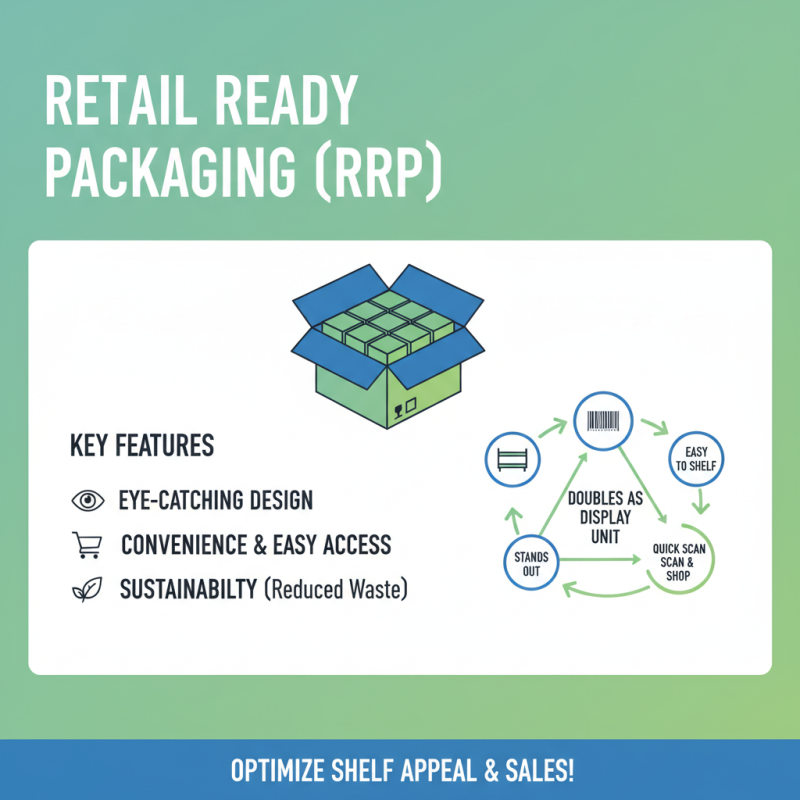
Retail Ready Packaging (RRP) is designed for easy display and access in retail environments. It enables products to stand out on shelves. Key features of RRP include its eye-catching design, convenience, and sustainability. The packaging often doubles as a display unit, reducing the need for additional materials.
A critical aspect of RRP is its ability to simplify the restocking process. Retailers can quickly replace empty displays. This saves time and minimizes disruption. The packaging is typically lightweight, allowing for efficient transport. However, some designs may not always hold up under heavy use.
Tips: Consider the environmental impact when choosing materials. Sustainable options can appeal to eco-conscious consumers. Reflect on your design's practicality. Does it enhance visibility? Does it facilitate easy access to products? Keeping the layout intuitive is essential. A well-thought-out design can significantly affect sales.
Benefits of Implementing Retail Ready Packaging
Retail Ready Packaging (RRP) offers many advantages for retailers and manufacturers. Implementing RRP can streamline the supply chain and reduce labor costs. According to a study by Smithers Pira, packaging redesign can lead to a 20% reduction in handling time. This allows staff to focus on customer service rather than re-stacking shelves.
RRP also enhances the shopping experience. Attractive designs can boost product visibility. Research indicates that impactful shelf packaging can increase sales by as much as 30%. Customers are drawn to visually appealing displays. A survey showed that 65% of shoppers base their purchasing decisions on packaging alone. However, not all retailers fully utilize RRP. Some may find it difficult to adapt their logistics systems to accommodate new packaging.
Cost is a concern for many. Initial investment in RRP can be high. Yet, the long-term benefits often outweigh these costs. Brands need to weigh the potential revenue against the expense of redesigning their packaging. Balancing these factors is crucial for success in today’s competitive market. Embracing RRP may require adjustments, but the potential for operational efficiency and enhanced customer engagement is significant.
Benefits of Implementing Retail Ready Packaging
How Retail Ready Packaging Enhances Product Visibility
Retail Ready Packaging (RRP) is designed to enhance product visibility on store shelves. With 70% of purchase decisions made in-store, packaging plays a crucial role. A well-designed RRP can grab attention quickly. Eye-catching graphics and informative labels can entice customers. Studies indicate that products in retail-ready packaging can see a sales increase of up to 30% compared to traditional packaging.
Visibility is not solely about aesthetics. RRP should also improve organization. Store employees find RRP easier to handle and put on display. This efficiency ensures products are more accessible to shoppers. Reports show that 60% of retailers prefer products that simplify restocking. Yet, not all RRP designs succeed. Some fail to address shelf space effectively. Packaging must also align with sustainability practices. This balance remains a challenge in the industry.
The impact of RRP on consumer behavior is significant. Products that stand out can influence buying choices. An estimated 55% of shoppers rely on packaging to make quick decisions. They often ignore items that lack unique design features. Therefore, a focus on product visibility becomes essential for brands looking to thrive. Businesses face pressure to adapt and innovate their packaging strategies for better visibility and sales.
Best Practices for Designing Effective Retail Ready Packaging
Retail Ready Packaging (RRP) is crucial for effective product presentation. It ensures products catch the eye and are easy to access. Designing effective RRP involves several best practices to optimize impact.
Keep it simple. Use clear graphics. Bold colors attract attention. Ensure the packaging communicates the brand’s identity quickly. Clarity in design can convert casual shoppers into buyers. Consumers often glance at products quickly. Make sure your packaging tells the right story.
Consider sustainability. Eco-friendly packaging is a major trend. Customers appreciate brands that care for the environment. Use recyclable materials. This might decrease profits initially but will build loyalty. Think long-term.
Tips: Avoid clutter in the design. Too much text can confuse customers. Test different designs. Gather feedback. You might think your design is perfect, but insights from others can reveal hidden issues. Save costs by choosing materials wisely. Sometimes, simpler is better, allowing for more creativity.