How to Optimize Logistics Packaging for Enhanced Efficiency and Cost Savings?
In today’s competitive market, optimizing logistics packaging is vital. Dr. Emily Carter, a leading expert in logistics packaging, once said, “Effective packaging can trim costs and improve operational efficiency.” This statement underscores the importance of thoughtful packaging design.
Many businesses overlook the profound impact of packaging on logistics performance. Poorly designed packages can lead to damage, increased transportation costs, and delayed deliveries. Companies often face the challenge of balancing cost and sustainability in their logistics packaging. Simplifying designs and choosing the right materials can significantly enhance efficiency.
However, not every approach yields the best results. Some organizations fail to conduct adequate testing, leading to unforeseen issues. It’s essential to regularly reassess logistics packaging strategies. Insights gained through reflection can foster innovation and drive better outcomes in the supply chain. Emphasizing effective logistics packaging could transform operational practices and produce sustainable cost savings.
Best Practices for Selecting the Right Packaging Materials
Selecting the right packaging materials is crucial for optimizing logistics efficiency and cost savings. The right materials can reduce waste and minimize shipping costs. According to a study by Smithers Pira, packaging accounts for almost 30% of logistics costs. Choosing lightweight materials can substantially cut these expenses.
Tips: Evaluate your packaging options. Consider how much weight each material adds. Sometimes, heavier materials seem durable but increase shipping costs significantly. Look for alternatives that offer strength without added weight.
Sustainability is another important factor. Eco-friendly materials can attract customers who care about the environment. A report by Packaging Europe indicates that 72% of consumers prefer sustainable packaging. However, not all eco-friendly materials are suitable for every product. Testing different options is necessary.
Risks exist when shifting materials. Sometimes, innovative packaging can lead to unexpected issues, such as product damage in transit. Always prototype and test before fully implementing new solutions. Balancing cost, efficiency, and sustainability requires careful consideration and continual reflection on choices made.
The Role of Packaging Design in Reducing Waste and Costs
Effective packaging design plays a critical role in reducing logistical waste and costs. According to a report from the World Economic Forum, better packaging can save businesses up to 30% in shipping costs. By carefully designing packaging, companies can minimize material usage while ensuring product safety. This balance is crucial in times of rising shipping rates and environmental concerns.
Many companies use excessive packaging, leading to increased waste. The EPA states that packaging waste accounted for nearly 30% of municipal solid waste in 2021. Optimizing package size and materials can significantly lower this figure. For instance, shifting to more lightweight materials can reduce transport costs sharply. Yet, companies often hesitate to change existing systems, fearing disruption.
Moreover, not all packaging designs are efficient. Flaws in design may lead to damaged products, incurring further costs. Research indicates that improperly packaged goods cost businesses over $1 billion annually in damages. Emphasizing the importance of testing and refining packaging can help mitigate these losses. Companies must reflect on their practices and innovate where necessary.
Packaging Design Impact on Logistics Efficiency and Cost Savings
Technological Innovations in Packaging for Logistics Efficiency
The logistics industry is rapidly evolving due to technological innovations in packaging.
Smart packaging solutions are making a significant impact. They can monitor conditions, track locations, and even communicate with logistics systems. This technology reduces waste and improves delivery times.
Tips for optimizing packaging include using materials that are both lightweight and durable. This can minimize transportation costs. Automated packaging systems can also save time and reduce human error in the packing process. Just-in-time delivery methods can keep inventory levels low while ensuring that products are always available.
However, not all innovations are perfect. Some technologies may require high initial investments that may not show immediate returns. Companies must measure the long-term benefits versus costs. Reflecting on these choices is essential, as every company has unique needs and limitations.
Strategies for Streamlining Packaging Processes in Warehousing
Efficient packaging processes can significantly enhance logistics operations. According to a report by the McKinsey Global Institute, companies that streamline their supply chain can cut costs by up to 25%. To achieve this, focusing on the warehousing aspect is crucial.
One important strategy is to evaluate current packaging materials. Overly large boxes waste space and increase shipping costs. Ensuring packaging fits products efficiently can reduce material waste and improve space utilization. It’s essential to train employees on best practices for packaging. This training can lead to faster processes and fewer mistakes. According to a study by the Logistics Management, optimizing packaging processes can lift operational efficiency by 30%.
**Tip:** Implement automated systems to assist in packaging decisions. Automation can decrease human error and speed up the workflow.
Moreover, regular assessments of packaging suppliers can lead to cost savings. Many companies forget to compare options periodically. Supplier pricing can fluctuate, and not checking regularly may result in overpaying.
**Tip:** Use data analytics to monitor packaging efficiency metrics. This can highlight areas for improvement in real-time. Engaging in continuous evaluation reinforces a culture of efficiency within the warehousing team.
How to Optimize Logistics Packaging for Enhanced Efficiency and Cost Savings?
| Packaging Type |
Material Cost ($) |
Weight (lbs) |
Size (inches) |
Stackability Score |
Recyclability (%) |
| Corrugated Cardboard |
0.50 |
2.5 |
18 x 12 x 12 |
8/10 |
100 |
| Plastic Pallet |
15.00 |
5.0 |
48 x 40 x 5 |
9/10 |
80 |
| Bubble Wrap |
0.30 |
1.0 |
24 x 12 |
7/10 |
100 |
| Shrink Film |
0.10 |
0.5 |
20 x 15 |
6/10 |
40 |
| Foam Inserts |
1.00 |
2.0 |
16 x 12 x 2 |
8/10 |
75 |
Evaluating the Impact of Packaging on Shipping and Delivery Times
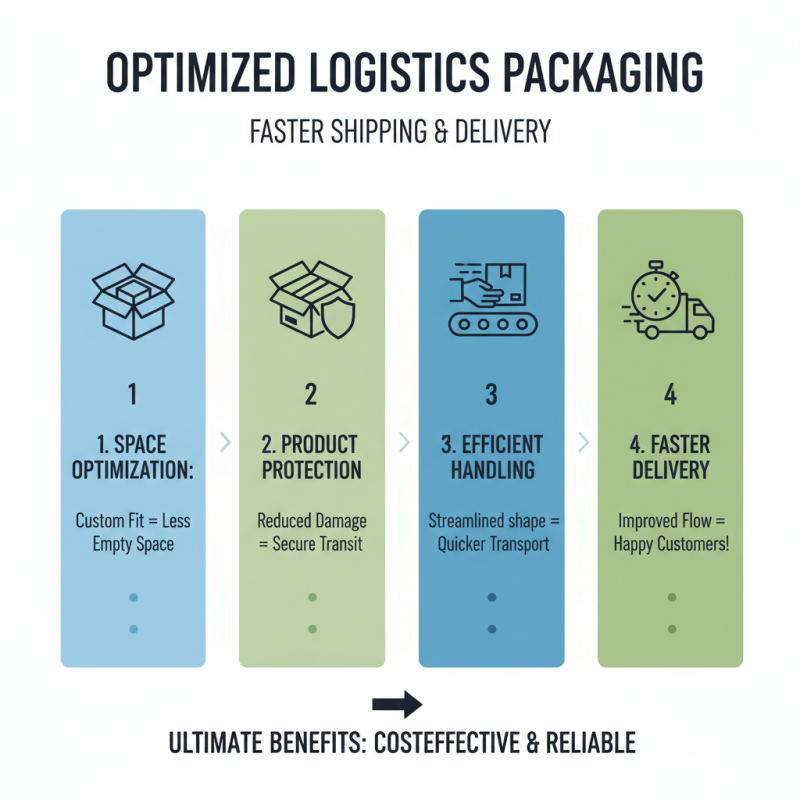
Optimizing logistics packaging can significantly impact shipping and delivery times. Well-designed packaging helps products fit better in transit. It reduces wasted space and prevents damage. When packages are streamlined, handling and transportation become more efficient. This leads to faster delivery, which is vital for customer satisfaction.
Tips for better packaging: Focus on size. Use packaging that closely fits the product. Avoid oversized boxes that result in wasted space. Additionally, invest in quality materials that protect items during transit. Fragile items need extra attention. The right cushioning can prevent costly damages and delays.
Another area to evaluate is recyclability. Packaging that is easy to recycle can save time at disposal points. This may seem small, but it adds up over time. Be mindful of the types of materials used. Are they biodegradable or environmentally friendly? It reflects the company’s values and can enhance brand perception. Remember, packaging might seem simplistic, but it’s a critical element in logistics. Finding the right balance between cost and efficiency requires ongoing assessment.